
The reason my wife and I first heard of Okunoshima, Hiroshima’s Rabbit Island, wasn’t a photograph of a rabbit.
It was a very long line of people at Tadanoumi Port. We happened to drive past and wondered what on earth everyone was waiting for.
We looked it up: they were catching a boat to an island famous for its rabbits. So, in November 2025, we came back to see it for ourselves.
We went for the rabbits, but came away remembering far more: the sea, autumn leaves, old wartime buildings and even families fishing. Here is what we found as we walked around the island.
How to reach Okunoshima from Hiroshima
You can’t just drive across to Rabbit Island. Most people reach it by ferry from Tadanoumi Port, near Takehara in Hiroshima Prefecture. The boat journey takes about 15 minutes; JR Tadanoumi Station is a short walk from the port.
When we first noticed the island, the line at the port was huge. On the day we actually visited, it was busy again—busy enough that taking a relaxed photograph of the boarding area wasn’t really on my mind.
Check the official ferry and access guide before travelling. The island isn’t somewhere to arrive without checking the return sailing.
Where are all the rabbits? Not necessarily at the ferry pier
I’ll admit what I expected. It’s called Rabbit Island, so I imagined rabbits everywhere the instant we stepped off the boat.
You see deer quite quickly when you visit Miyajima. I thought this might be similar.
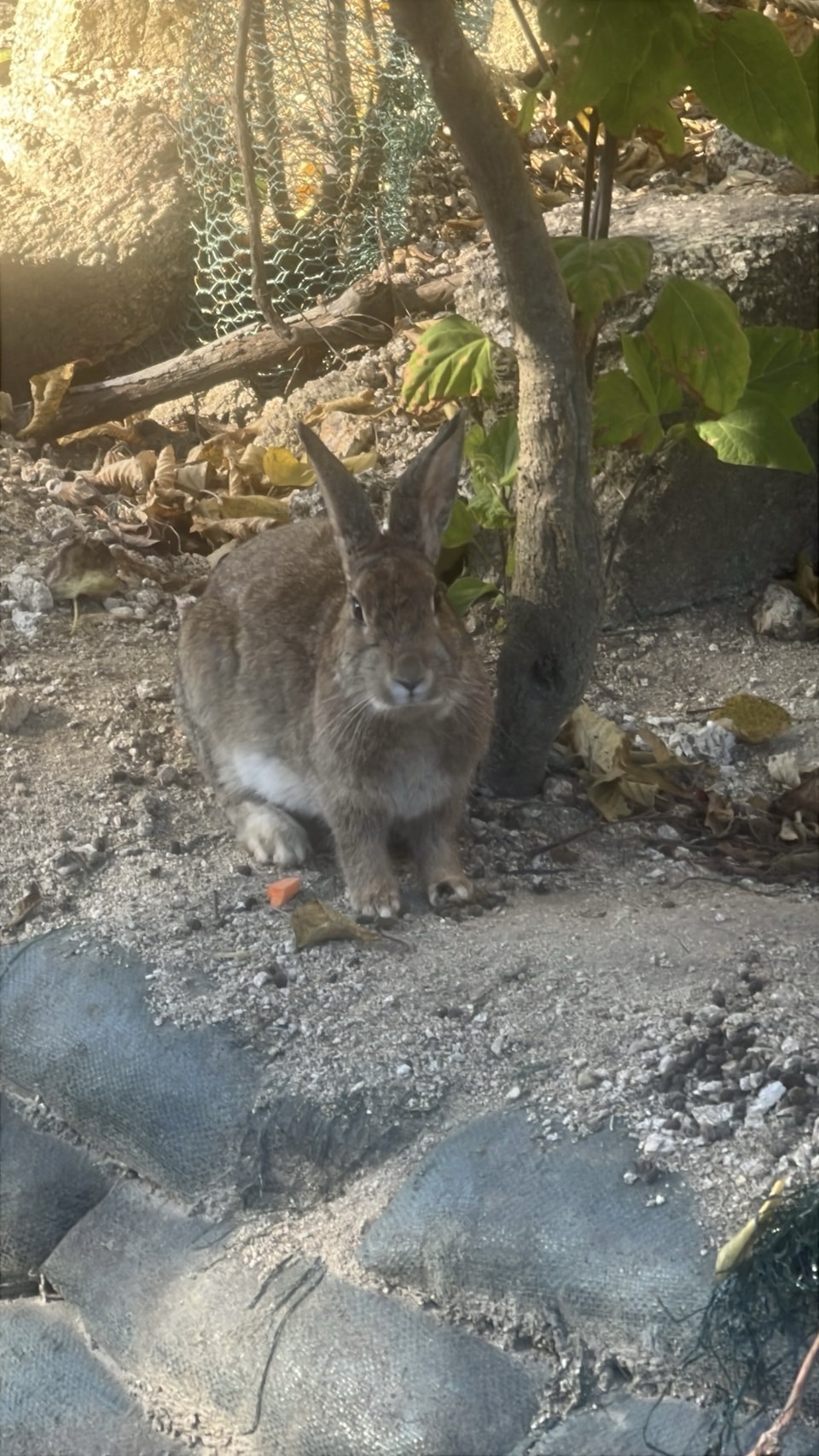
But when we disembarked, there weren’t rabbits rushing toward us. We started walking clockwise around the island, wondering when the rabbit part of Rabbit Island would begin.
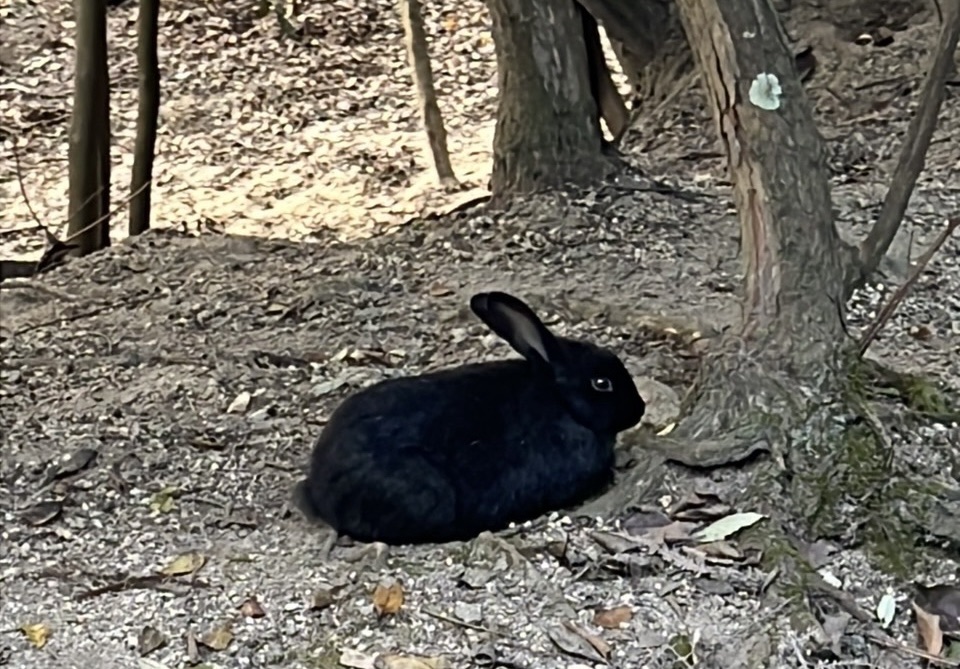
By the time we reached the area around the campground, we were finding them: under trees, along the path and near bushes.
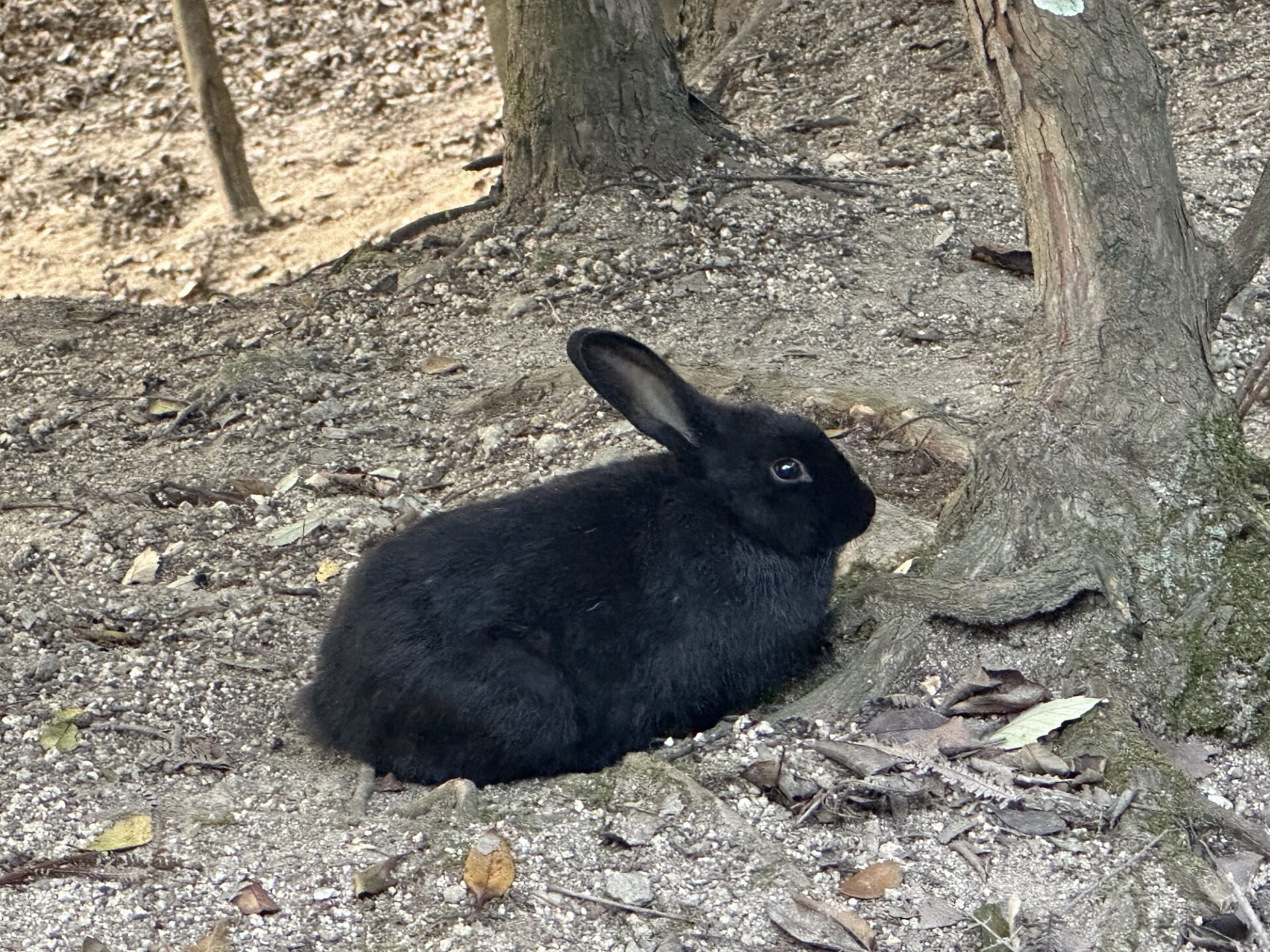
There they were. We hadn’t come to the wrong island after all.
Enjoy the rabbits, but look after them too
We didn’t feed the rabbits on our visit, though we saw plenty of people carrying vegetables.
The rabbits are wild animals. Don’t chase or pick them up, and don’t leave food behind. If you do feed them, follow the current local rules, give an appropriate amount in a safe place and stay until it is eaten.
The island does not normally sell rabbit feed, so check in advance rather than assuming you can buy it after arriving. See the official Rabbit Island FAQ and etiquette guidance.
Another surprise: people were fishing
Not far beyond the campground, we noticed a family enjoying a fishing session. And from what we could see, they were catching fish.
We had come to look at rabbits, but as someone who likes fishing, I suddenly found myself watching the water as well. I wondered whether the fish were less wary because the island isn’t crowded with anglers. That’s only a guess, not something I can prove.
Fishing is offered as a visitor activity in designated areas, but that doesn’t mean you can cast a line anywhere. Look for current on-site instructions and avoid the piers or other restricted places. Official information about fishing on Okunoshima.
The island’s darker history: buildings from the poison-gas era
Okunoshima has another story, one quite different from its rabbits. The former Imperial Japanese Army produced poison gas here from 1929 until the end of World War II in 1945.
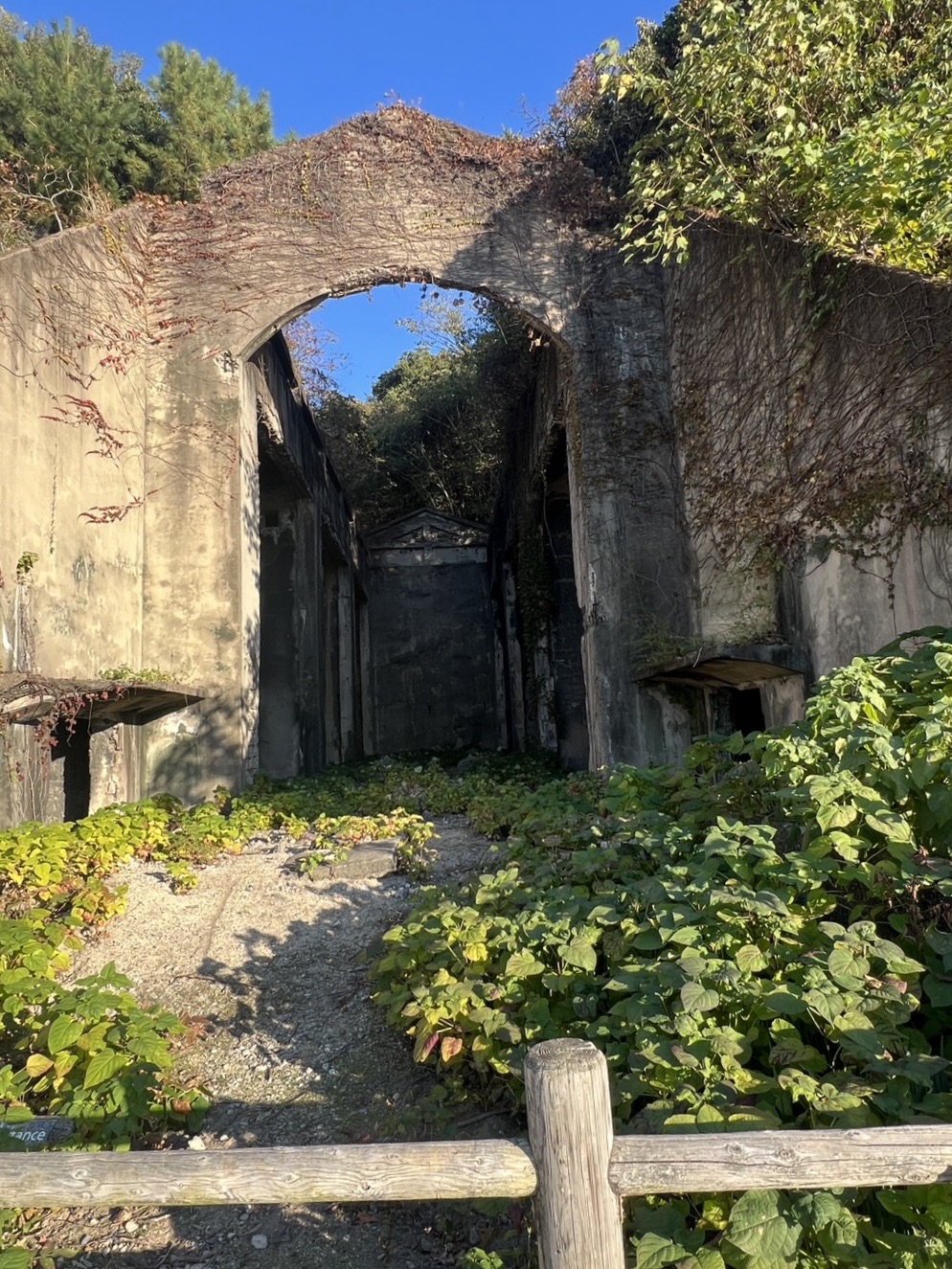
Some of the surviving structures sit among trees and vegetation. Concrete walls, old arches, and plants growing around buildings give parts of the island an eerie atmosphere.
As I walked past some of them, the setting briefly reminded me of a Final Fantasy dungeon. That’s how the scenery struck me—not what the buildings really are. These were part of a painful history, not a game.
The Okunoshima Poison Gas Museum explains that history. If you’re visiting for the rabbits, I’d still encourage you to leave time to learn why these buildings are here. Takehara City’s official museum information.
A funny encounter near the ruins
Near the old facilities, we passed what seemed to be a couple. The man was talking passionately about military history and the buildings around us.
His companion, meanwhile, looked as though she had completely checked out of the conversation.
I understand the urge to talk about something you love. But if you’re visiting Rabbit Island together, perhaps make time to talk about the rabbits too.
In November, the sea and autumn leaves are beautiful together
Another part of our November visit that surprised me was the scenery.
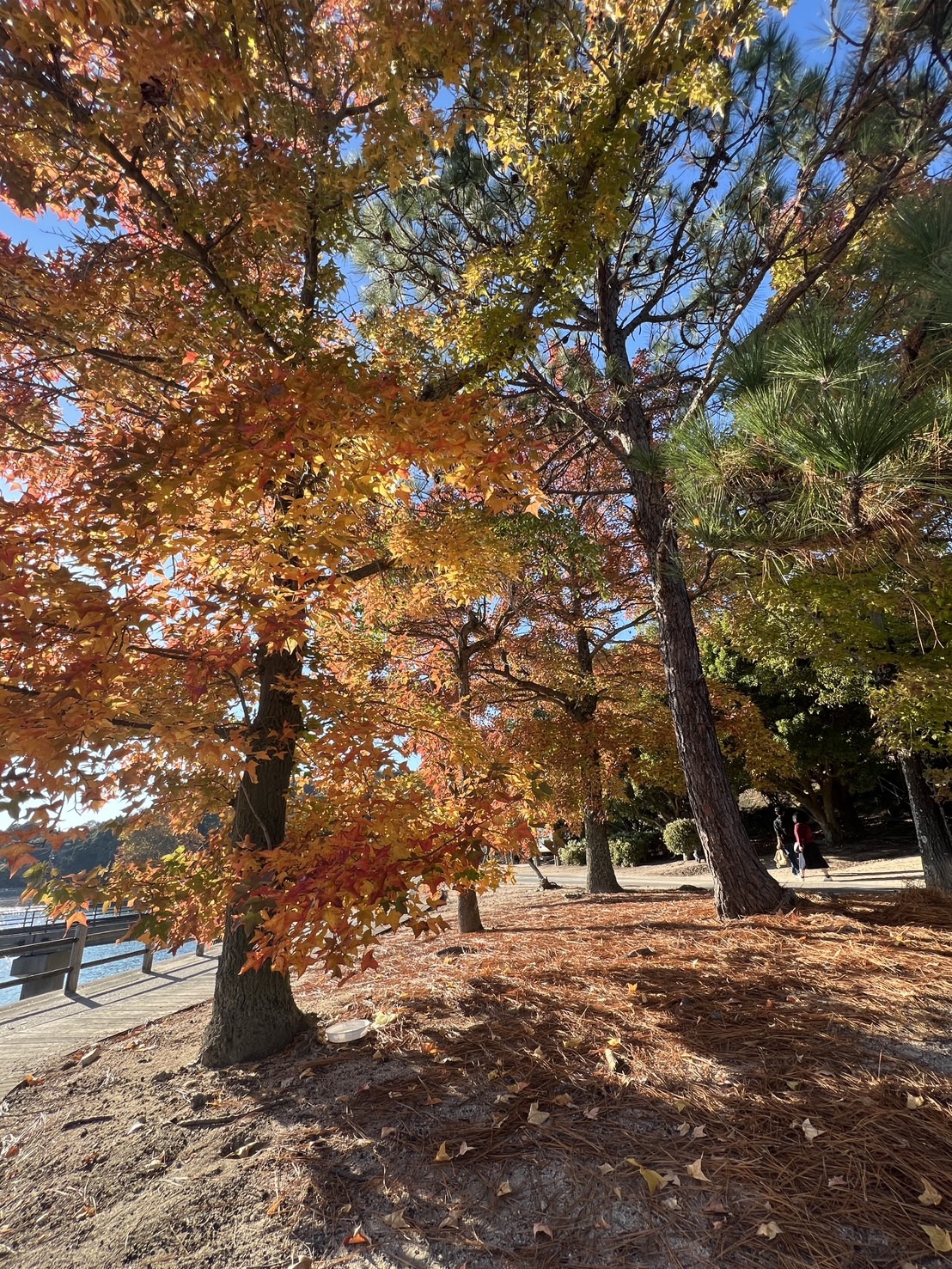
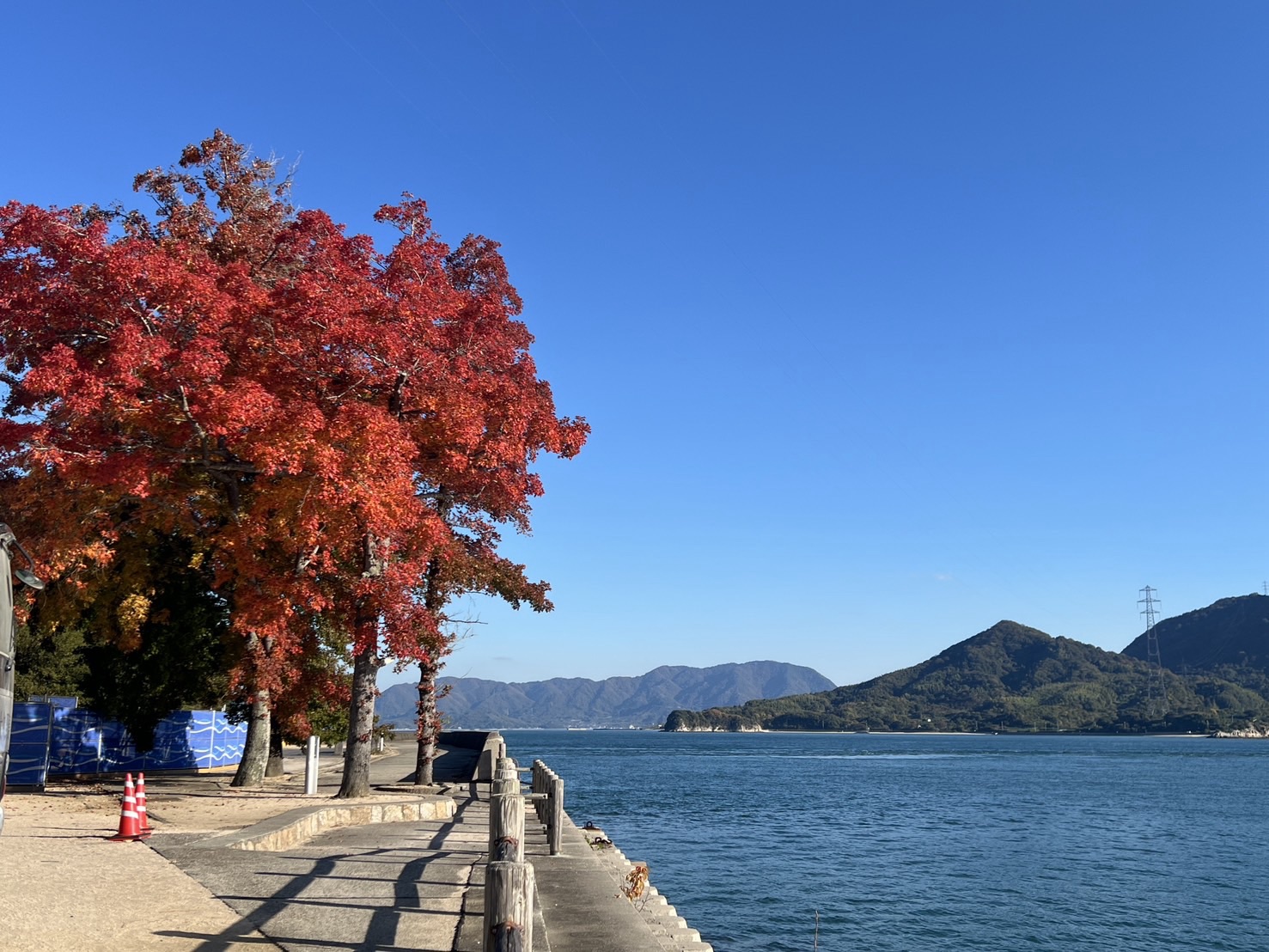
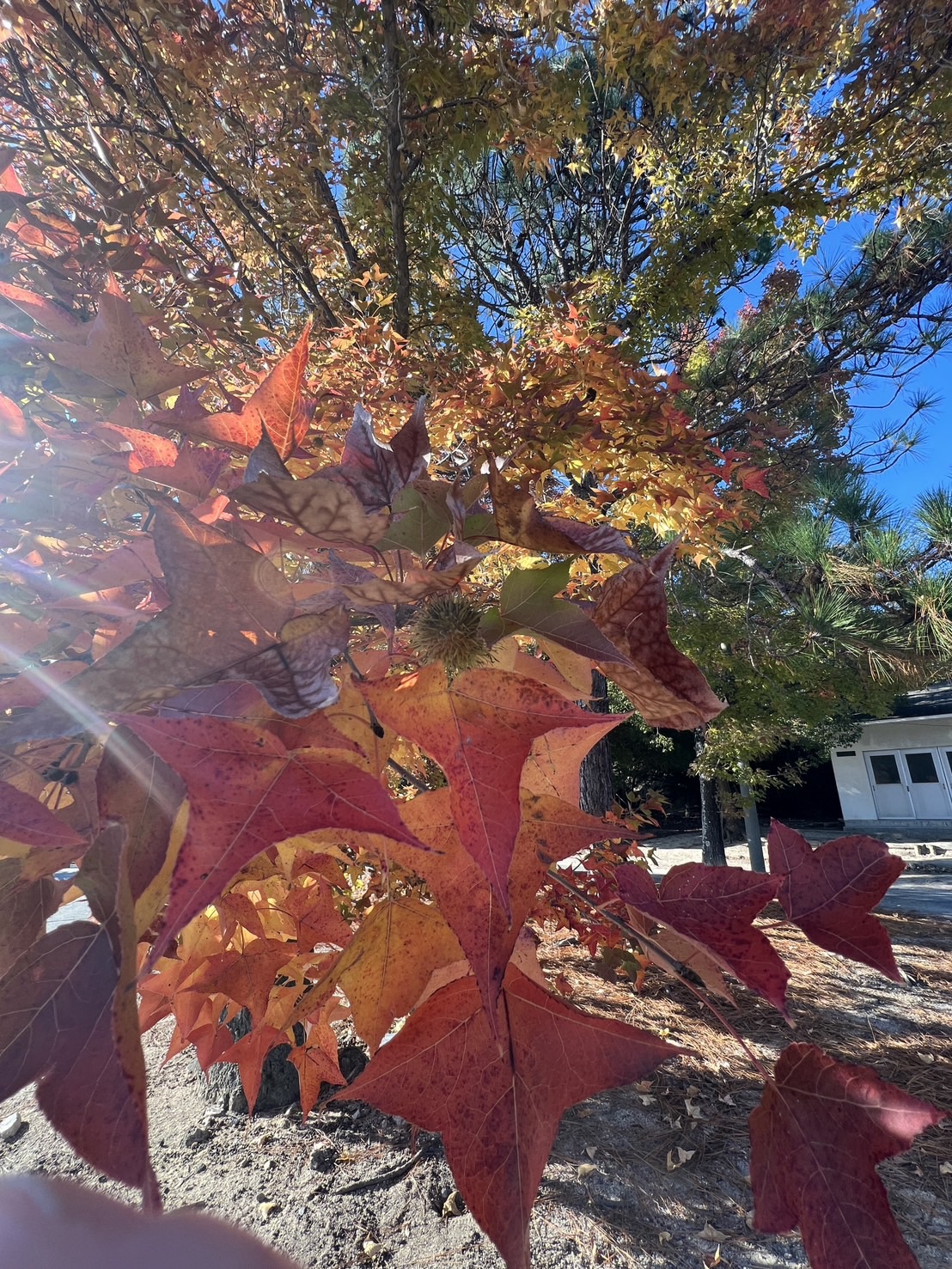
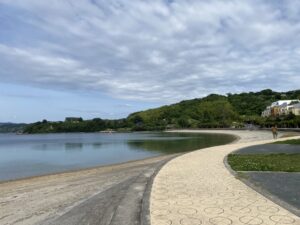
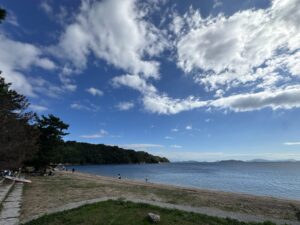
I knew about the rabbits and the wartime ruins, but hadn’t imagined how pleasant the island would feel as an autumn walk. Blue water, blue sky and patches of red and orange leaves along the way.
You can go from a sombre old building to a bright view of the Seto Inland Sea in just a short walk. That contrast stayed with me.
How long should you allow on Rabbit Island?
We walked clockwise, but I don’t remember our exact walking time. The official Nature Trail is approximately 4 km and 70 minutes at walking pace.
That’s just the route itself. Stop for rabbits, photographs, the old structures and the sea, and the visit naturally takes longer. For a day trip, I’d leave at least two to three hours or more, allowing extra time for your ferry schedule.
For a map of the walking route, see Kyukamura Okunoshima’s official walking guide.
Food, ferry times and other things to know
You can eat at the island’s Kyukamura hotel and its associated food facilities, but Okunoshima isn’t a town lined with restaurants and convenience stores.
Personally, I’d consider having a meal on the Tadanoumi side before sailing, or checking the opening hours of the island restaurant if you plan to eat there. That makes it easier to enjoy the walk without rushing to beat the ferry.
- Check your boat both ways. Busy days at Tadanoumi Port can bring long lines.
- Protect the rabbits. Don’t chase, pick up or leave food behind.
- Dress for walking. The best part of the island is wandering between the sea, rabbits and historic sites.
- Allow time for the museum. The wartime story deserves more than a passing glance.
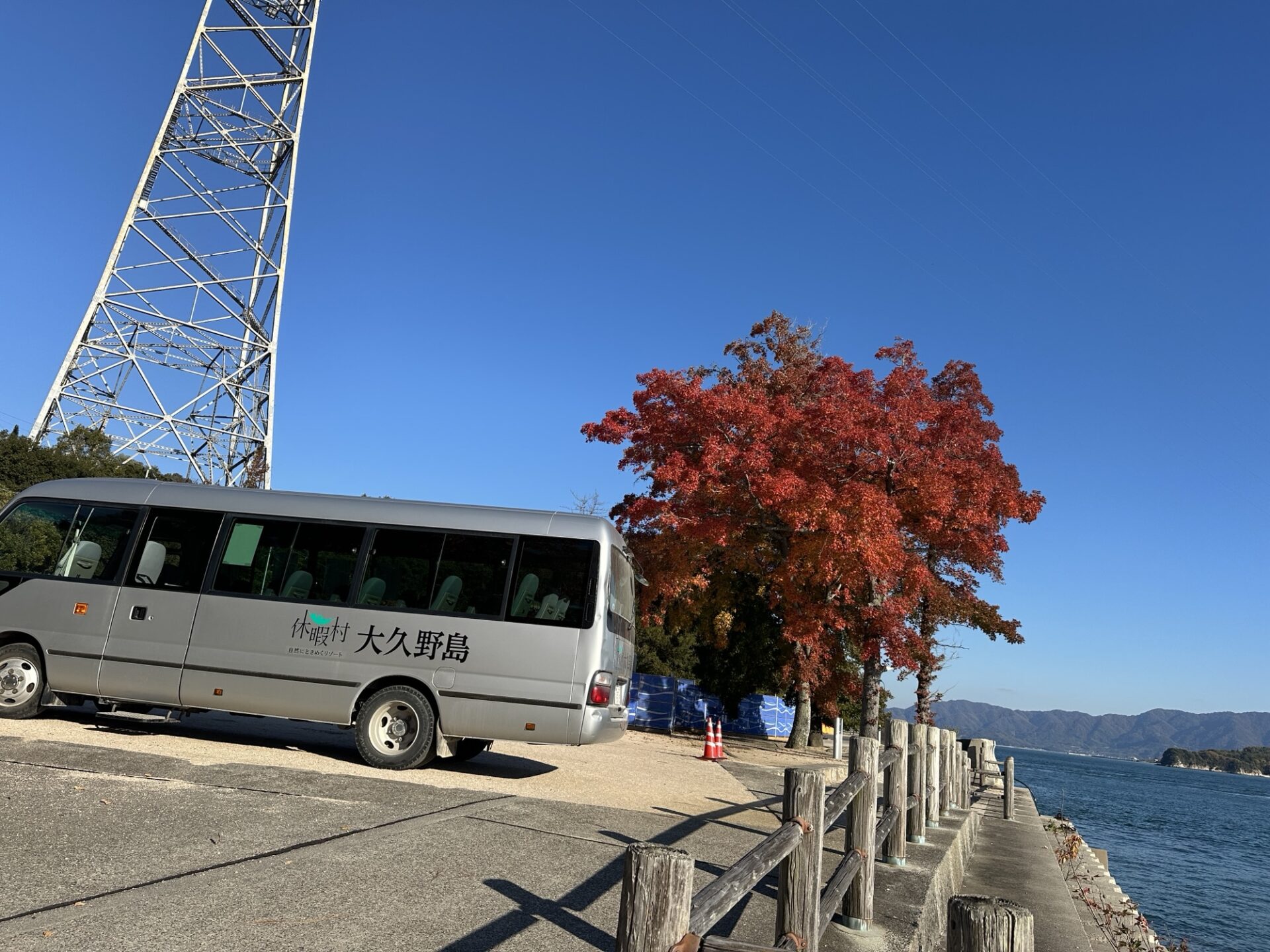
- Driving? Use the mainland parking at Tadanoumi Port rather than expecting to drive around the island.
You can check facilities and restaurant details at Kyukamura Okunoshima.
Our verdict: don’t leave after the first rabbit
We first became curious about Okunoshima because of an enormous line at the port. Then we went because of the rabbits.
The rabbits were lovely, but what made the day memorable was the whole walk: sea views, autumn colours, surprising fishing activity, and the unsettling remains of another era.
If you visit, enjoy the rabbits. But give the island itself time, too. That’s when Rabbit Island starts to become something more interesting.
This is our firsthand November 2025 visit. Read the original Japanese article, or explore more English Travel stories.



コメント