I set out from Hiroshima for two days of driving around Shikoku. My plan was ambitious: cross the Shimanami Kaido, wander around Dogo Onsen, see Shikoku Karst and the blue Niyodo River, then spend the night in Kochi City before visiting Katsurahama Beach.
Things went wrong almost as soon as I reached the mountains.
The sky turned dark, fog rolled in, and the view at Shikoku Karst disappeared behind an extraordinary downpour. But the journey became one of those trips I remember for all the unexpected moments: Yosakoi dancing, river shrimp, turtles that looked ready to launch themselves at their dinner, and a final glimpse of Niyodo Blue.
This is the real route I drove, not an idealized itinerary. It’s a long trip with some narrow mountain roads. I’d consider three days if you want to enjoy it more slowly.
Our two-day route from Hiroshima
Day 1: Hiroshima → Onomichi → Shimanami Kaido → Kurushima Strait → Dogo Onsen → Shikoku Karst → Suishobuchi (Niyodo River area) → Kochi City → Hirome Market → OMO7 Kochi → izakaya dinner.
Day 2: Katsurahama Beach → Katsurahama Aquarium → soba lunch → Yasui Gorge → return toward Hiroshima.
The route is much longer than a direct drive from Hiroshima to Kochi. The detours were part of the fun, but they’re not for everyone.
Day 1: Crossing the Seto Inland Sea and getting caught in the mountains
The Shimanami Kaido and Kurushima Strait
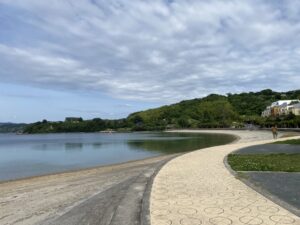
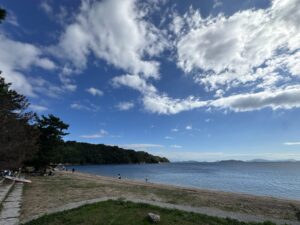
I left Hiroshima, headed toward Onomichi and took the Shimanami Kaido bridges across the Seto Inland Sea. I stopped near the Kurushima Strait along the way.

Blue water and bridges stretching toward Shikoku: a lovely start. Of course, for a trip supposedly headed to Kochi, I still wasn’t anywhere near Kochi.
Dogo Onsen: glass art, tai-meshi and a famous bathhouse
My next detour was Dogo, a historic hot-spring district in Ehime.
At the Dogo Giyaman Glass Museum I enjoyed the delicate glass displays and the way light passed through the pieces.


Then I walked around Dogo’s shopping street, where you can browse souvenirs and spot the famous citrus-juice taps.

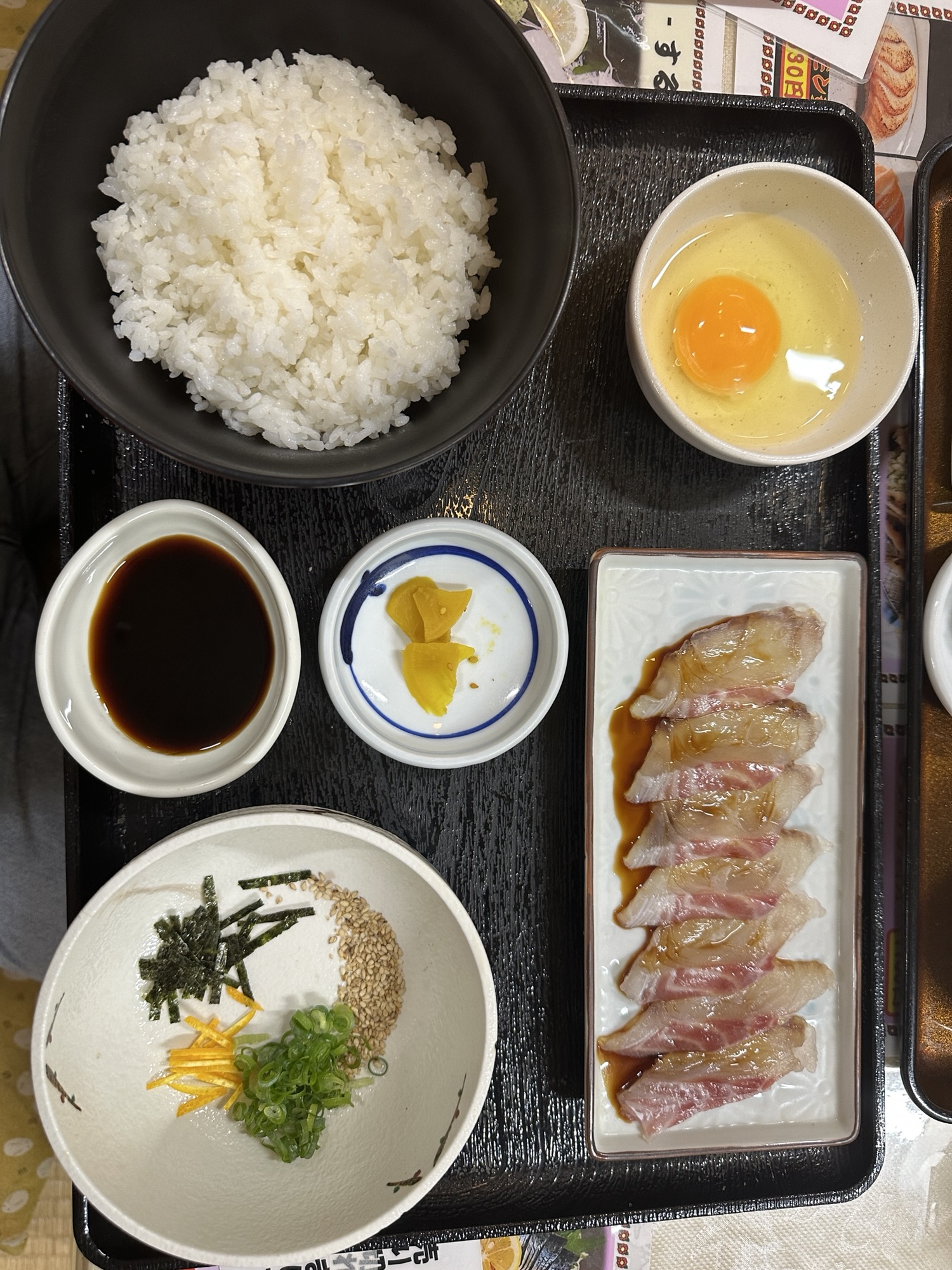
For lunch I enjoyed Uwajima-style tai-meshi, raw sea bream with rice, egg and sauce. It’s quite different from the cooked sea-bream rice you may have encountered elsewhere in Japan.
I also visited the outside of Dogo Onsen Honkan before heading into the mountains.

Shikoku Karst: my mountain view lasted just a few minutes
Shikoku Karst was supposed to be one of the most scenic stops of the entire journey. I reached the highlands and began taking photos.

Then an ominous-looking cloud rushed in. The fog moved unbelievably fast, and the rain that followed was ferocious.
In minutes, the landscape I’d been admiring disappeared into white. I was even worried about the cattle grazing nearby.
There was nothing sensible to do but leave. So much for my sweeping mountain panorama.
A practical warning for drivers: Some roads around Shikoku Karst are very narrow, and certain approaches close in winter due to snow and ice. Fog can make visibility almost zero. Check the current Shikoku Karst road and access information before setting out, rather than relying on the conditions from my trip.
Suishobuchi: even rainy water could look this clear
I’d also planned to see Suishobuchi in the Niyodo River area. The rain was lighter there. Technically.
It was still raining, but the water was so clear that I could see the riverbed. Then I noticed another approaching cloud, one that looked suspiciously like the weather that had just chased me out of the highlands.
Retreat number two. This time I headed straight to Kochi City.
Hirome Market: why did I eat ramen in Kochi?
After checking into OMO7 Kochi, I headed toward Hirome Market for something to eat.

You might reasonably expect me to order Kochi’s famous seared bonito. But the ramen shop near the entrance looked so tempting that I ended up eating noodles.


I ate the ramen and went back to the hotel. I’d traveled a very long way to reach Kochi, and at its famous market I’d eaten ramen. I still find that funny.
OMO7 Kochi: the Yosakoi show was a highlight
Back at the hotel, I relaxed in my room, then headed into the lobby area for a Yosakoi dance experience.

It was genuinely wonderful. Seeing and joining in the energy of the dance was worth the trip in itself.


OMO7 Kochi currently advertises Yosakoi Rakuen LIVE, an approximately 30-minute evening program at 9 p.m., free for overnight guests. The event can change; check details with the hotel.
For overseas visitors who want a taste of Kochi’s Yosakoi culture outside the summer festival season, it’s a lovely option.
Dinner: river shrimp stole the show from bonito
After my ramen detour, I still wanted proper Kochi food. So I went to an izakaya for some local dishes.

Naturally, bonito was on the table. But the food I kept thinking about afterward wasn’t the bonito at all.
It was the river shrimp.

Crisp at first bite, then sweet, with a subtle river-like flavor. I loved it.
Imagine making it all the way to Kochi and remembering the river shrimp more vividly than the region’s most famous fish. That’s what happened to me.
Day 2: Katsurahama, hungry turtles and a second chance at Niyodo Blue
Katsurahama Beach and the Ryoma Sakamoto statue
Day 2 began with mixed clouds and sunshine. I went to Katsurahama, a well-known coastal spot in Kochi.

After looking at the Ryoma Sakamoto statue, I walked down to the shore.

The beach surprised me. I’d expected ordinary sand, but there were plenty of small, rounded stones underfoot. Those colorful stones are part of Katsurahama’s landscape.
The official Katsurahama Park map is helpful for planning the visit.
Katsurahama Aquarium: I came for sea creatures, the turtles delivered a thriller
After the beach, I visited Katsurahama Aquarium.

My biggest surprise? The turtles. When food appeared, they surged upward with such force that I half expected one to burst out of the tank.

The snapping sound was enormous. I’d thought I was going to watch some cute turtles. Instead, I found myself watching something closer to an action film.
As of November 2026, the aquarium’s official site lists 9 a.m.–5 p.m. hours and adult admission of ¥1,600. Exterior painting work is also scheduled for part of November 2026, so check current notices before visiting.
I was heading home—until the sky cleared
I was supposed to head back toward Hiroshima. I stopped for soba along the way.

I remember it was a slightly unusual bowl, but I can’t reliably tell you exactly what was in it anymore. The photograph remembers better than I do.
By the time I finished, the weather had improved, and I decided to turn toward Yasui Gorge.
The narrow road to Yasui Gorge
Getting to the gorge meant negotiating some narrow mountain roads.
I found myself thinking, “What am I going to do if a car comes the other way?” And, naturally, cars came the other way.

My Lexus UX’s compact maneuverability was genuinely helpful. If you’re unfamiliar with Japanese mountain roads, be cautious, watch for opposing traffic and check access conditions beforehand.
Finally, the vivid blue water of the Niyodo River area
At Yasui Gorge I finally got the river views I’d been hoping for.


The water was strikingly clear, with rocks visible beneath it. I know many clean rivers around Hiroshima, but they often appear greenish to me. Here, the color looked distinctly blue.
I used to wonder whether that blue was simply connected to the limestone landscape. In fact, the Niyodo Blue tourism information explains that water clarity, the characteristics of the riverbed and surrounding geology all play a part.
On Day 1 I’d seen clear water at Suishobuchi in the rain. Now, with the weather finally improving, I was enjoying a completely different view of the same river region.
Do you need a rental car for this road trip?
For the exact route I drove, a car made a big difference. Dogo, Shikoku Karst, Kochi City and the Niyodo River region are spread across a large area. Some scenic mountain spots also have limited or no public transport.
That doesn’t mean you need a rental car to enjoy central Kochi. But it gave me the freedom to take a spontaneous detour when the weather cleared.
If you’re planning a similar self-drive trip, compare rental cars for your trip in Japan with DiscoverCars.
Affiliate disclosure: I may receive a commission for an eligible booking through this link. Check Japanese driving-licence requirements, insurance, tolls and mountain-road conditions before you drive.
My final thoughts: the unexpected moments made the journey
This two-day trip gave me the Shimanami Kaido, Dogo Onsen, a few glorious minutes at Shikoku Karst, Kochi’s Yosakoi dance, river shrimp, dramatic turtles and a last-minute glimpse of Niyodo Blue.
The weather ruined my original mountain-view plan. Hirome Market somehow became a ramen stop. The drive was longer than any sensible person would recommend for a relaxed holiday.
And I still loved the trip.
Sometimes the places you didn’t expect to enjoy become the stories you tell afterward.
This article is based on my firsthand journey and original photos. Read the original Japanese version or visit English Travel for more trips around western Japan.


コメント