
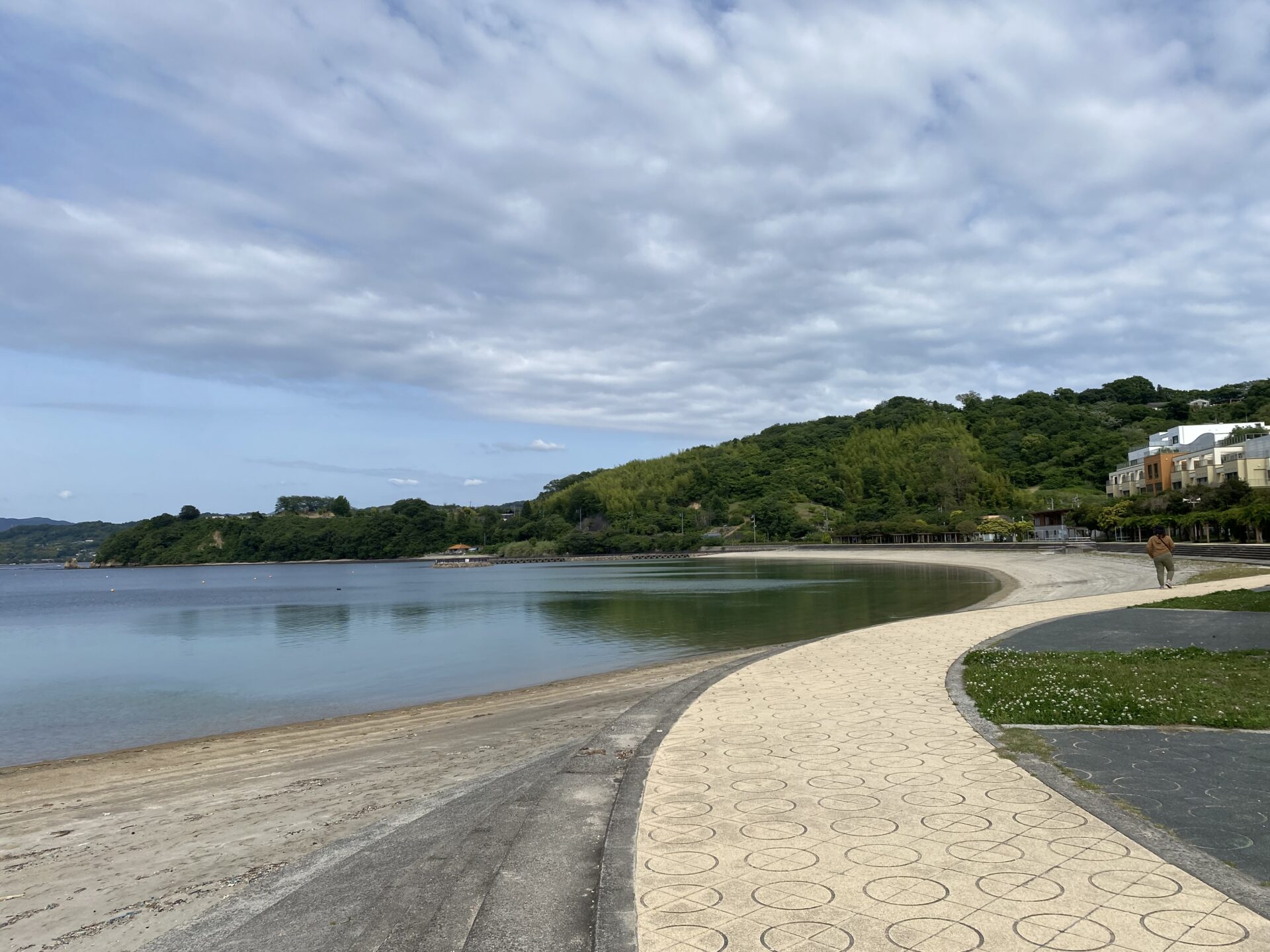
A lot of my visits to Etajima started with a fishing rod.
I’ve come here many times to fish, so for a long while I thought of it mainly as a place to cast a line. Then I tried exploring it from a tourist’s point of view.
Turns out Etajima is a lovely place for a relaxed day out from Hiroshima. The water is close almost everywhere you go, the coast is full of small detours, and I found interesting cafés, tofu treats, olive products and quiet beaches.
This is a guide to places I’ve actually stopped at during my Etajima travels. Not every stop was on the same day, and I’m not pretending this is a carefully timed package tour.
A note on changing businesses: Uminos Spa & Resort, which I once enjoyed, closed under its former operation on March 31, 2026. I’ll share that memory below, but it is not a place to book now.
Why explore Etajima from Hiroshima?
Etajima is in the calm Seto Inland Sea, south of central Hiroshima. It feels like a small getaway: fishing boats, hills, coastal roads and cafés with the sea just outside.
There isn’t one giant attraction you’re supposed to visit and leave. What I enjoy most is driving from one interesting little stop to another.
The change of pace is the point.

A good first stop: Hajimari no Terrace
One place I enjoyed near the route over from the Kure side was Hajimari no Terrace.
The name roughly means “the terrace where things begin.” It suited the atmosphere. We stopped for a snack, looked out over the sea and enjoyed the feeling of a day trip just getting started.
On our earlier visit, the rooftop terrace view was a highlight. It made me want to see what the rest of the island had to offer.
The café’s official site currently describes seafood rice bowls, burgers and other light meals. Menus and opening times change with the weather and season, so check ahead. I’m describing how it felt on our visit, not guaranteeing my old order is still sold.
Mamegashima: why is an enormous red demon selling tofu?
Then there’s Shima no Eki Mamegashima.
The first thing you notice is an enormous red oni—a Japanese ogre. At a glance, I thought it might be a restaurant serving violently spicy food.
Nope. It’s a shop devoted to beans and tofu.
During our visit I found unusual products such as tofu in a water-balloon-like package, tofu soft serve and soy milk. The shop staff were cheerful and friendly; they were nothing like the scary-looking demon outside.
It’s exactly the type of odd little stop that turns an ordinary drive into something memorable.
The official regional tourism listing has Mamegashima’s current opening and location information. The shop is generally listed as open 11 a.m.–4 p.m., closed Tuesdays, but check before driving there just for the tofu.
Etajima Olive Factory: a delicious surprise from a fishing trip
Another stop I enjoyed wasn’t originally a sightseeing plan at all.
I was on Etajima to fish and stopped at Etajima Olive Factory along the way. You can eat, browse local products and learn more about the island’s olive oils.
The detail I remember most vividly? The lemon-flavoured olive oil. I really liked it.
The official Etajima Olive Factory site lists a restaurant and shop, with coastal garden seating and local ingredients. Check current dining hours and the Monday closure before your visit.
If you enjoy finding regional food souvenirs, I think it’s worth a look.
Human Beach Nagase: the quiet sea, and my thoughts about razor clams
One of my favorite unplanned stops was Human Beach Nagase.
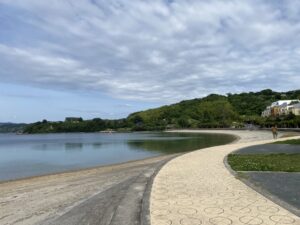
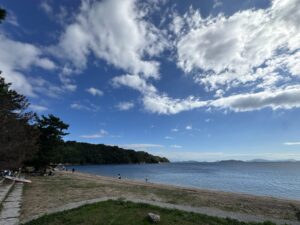
I was driving around Etajima when I decided to pull over and look at the water. The beach curves gently around the bay, with quiet waves and hills in the distance.

A normal tourist might immediately think about swimming.
My first thought was, “I want to dig for razor clams.”
I couldn’t help myself. But I did not actually collect clams on this visit, and I didn’t go swimming either.
The beach is managed by Etajima City. Its official beach information lists free parking, toilets and changing areas, and prohibits activities such as barbecues, camping, watercraft and fishing within the swimming beach. Razor clam harvesting is prohibited May 1–July 31, with other local rules also applying.
I prefer to think of it as a peaceful coastline stop where you can enjoy the landscape without needing a packed schedule.
Uminos Spa & Resort: a treasured memory, not a current hotel recommendation
I once stayed at Uminos Spa & Resort, a lovely seaside hotel on Etajima. The sea views, time by the water and memories of the stay have stayed with me.
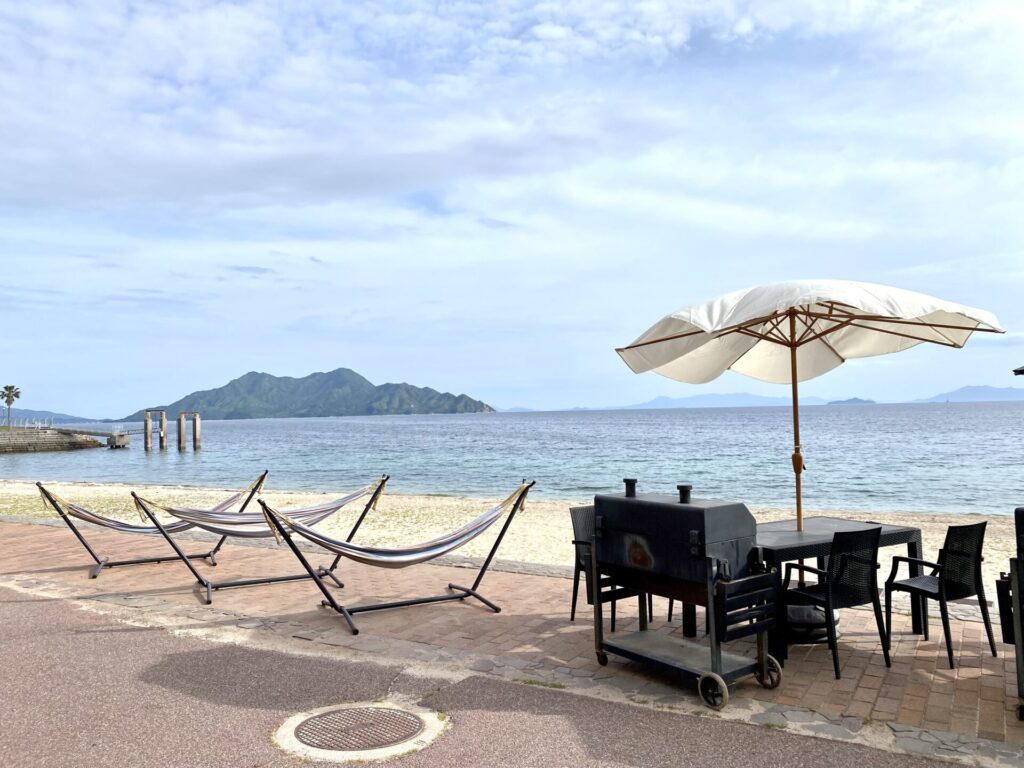
It was a beautiful experience. So hearing that the hotel would close made me genuinely sad.
Important update: The operator announced the end of its management term and temporary closure as of March 31, 2026. It should not be treated as an available hotel or restaurant for a new trip without a verified reopening announcement. See the official Uminos closure notice.
I keep my original Japanese stay report as a memory, not a booking guide.
How to get to Etajima: car, ferry or a combination
Etajima can be reached by roads from the Kure side, including bridges connecting the islands, or by passenger boats and ferries from Hiroshima Port and other terminals.
The important distinction for overseas visitors is that not every boat carries vehicles. If you’re renting a car, confirm which service accepts cars and whether you need to reserve a vehicle spot. If you’re travelling as a foot passenger, check how you’ll reach each stop after landing; island bus services aren’t always frequent.
Hiroshima City provides official ferry terminal and boarding information, including which routes carry vehicles.
For the kind of multi-stop island drive I enjoy, a car is convenient. But you don’t need one just to enjoy a ferry ride and a short coastal walk.
If you’re comparing ways to explore western Japan, you can compare rental cars in Japan on DiscoverCars.
Affiliate disclosure: I may earn a commission on eligible bookings through that link. Check Japanese driving requirements, road/boat access and insurance before reserving.
Sample way to enjoy a relaxed island day
I would start with a coastal stop and a café, then fit in a local speciality-food shop and leave plenty of time for a beach view. The order depends on whether you arrive via Hiroshima Port or drive across from Kure.
For a trip without a car, choose fewer places near your arrival port rather than trying to cross every corner of the island by bus.
Remember that the stops above reflect several visits, not one pre-planned route that I personally completed in a fixed order. It’s better to build your own day around the current opening hours and transport connections.
FAQ: Is Etajima worth a day trip from Hiroshima?
Is Etajima the same as Miyajima?
No. Etajima is a different island area south of Hiroshima, with its own villages, beaches and local food. The famous floating shrine is on Miyajima, not Etajima.
Is there enough to do without fishing?
Definitely. I originally visited mainly to fish, but my sightseeing visits changed my mind. I enjoyed cafés, local tofu and olive products, and the coast itself.
Can I stay overnight at Uminos now?
Not under the former operation: the hotel officially announced its temporary closure from March 31, 2026. Check its website for any verified new developments rather than relying on old booking links.
Is Etajima suitable for a short visit?
Yes, if you choose a couple of nearby stops. A full island tour takes more planning, especially if you’re combining ferries and local transport.
My verdict: enjoy the detours
Etajima has a way of making a simple trip feel like a real holiday.
There are calm blue views along the road, a tofu shop with an enormous red demon, surprisingly delicious olive oil, and beaches where I keep thinking about razor clams instead of swimming.
It isn’t a place I need to rush through. It’s a place where pulling over for one more look at the sea can be the best part of the day.
This guide is drawn from my own visits and older travel notes. Read the original Japanese Etajima guide or explore more in English Travel.



コメント